



|
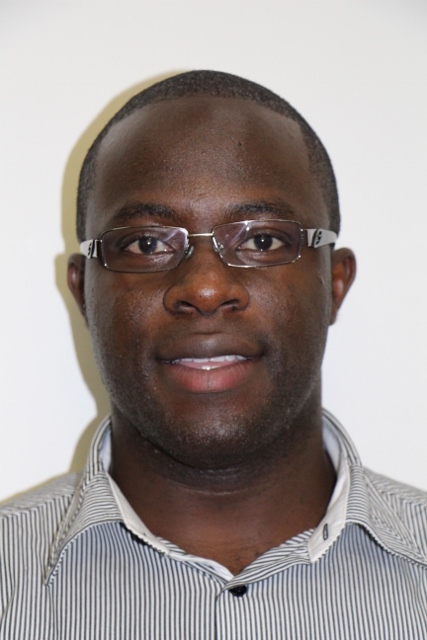
Excellent Sithole
 |
Chair: IEEE Educational Activities (EA), IEEE South Africa Section.
Contact Excellent Sithole, Denel Dynamics, Tel 012 671-1882,
This e-mail address is being protected from spambots. You need JavaScript enabled to view it
|
Download a presentation on IEEE educational activities (~1 MB)
The IEEE Educational Activities Committee in South Africa works towards serving the IEEE membership in South Africa in four principle areas:
A. Pre-university Education
(i) Nation-wide Teacher in-service programme (TISP)
Sponsors: Dept. of Basic Education (DoBE), IEEE Foundation, IEEE South Africa Section, Cape Peninsula University of Technology (CPUT), etc A brief report acknowledging the IEEE Foundation appears in the most recent edition of the IEEE Region 8 newsletter.
Formal funding agreements (2009/2010): US $15,000 (IEEE Foundation); around US $20,000 (DoBE)
Mentoring of neighbouring sections:
The IEEE South Africa Section is working with neighbouring IEEE sub-section, section and countries to arrange an IEEE TISP workshop in Lusaka, Zambia (24-25 Sept. 2010).
Funding of around US $50,000 (approved by IEEE EAB PECC)
(ii) Engineering Projects In Community Service – High (EPICS-High)
The South Africa Section was the first section to launch the above IEEE new initiative outside the USA.
A report appears on the cover page of the IEEE Region 8 newsletter.
A further feature will be made in the Sept. edition of “The Institute” (IEEE circular, with around a distribution of over 400,000 copies)
Funding of around US $12,500 (approved by IEEE New Initiatives Committee, 2009). Project in conjunction with Philadelphia Section.
Funding of around US $3,500 (approved as a result of a larger grant of US $ 450,000 - approved by the IEEE Board (Source: IEEE New Initiatives Committee, 2010)).
(iii) IEEE Student-Teacher and Research Engineer/Scientist (STAR) Program
Sponsored by IEEE WiE (Women in Engineering) - Funding approved by WiE - US $1,000 (2009); a new proposal will be submitted in 2010, in collaboration with a WiE affinity group active at a student branch (Uni. of Cape Town)
(iv) Promotion of IEEE portals:
B. University-level Education
(i) An IEEE/IET electronic library (IEL) consortium functions in coordination with SANLiC (South African National Library and Information Consortium): engaging some 10 Universities in Southern and Eastern Africa.
The distribution enables for access to IEL, including IEEE standards (packaged together).
The consortium is valued at approx. US $500,000 / year (funded by 10 Universities). This is money that goes back into the IEEE.
A brief report acknowledging the abovementioned appears in the most recent edition of the IEEE Region 8 newsletter. We acknowledge IEEE Sales and Marketing for enabling the above.
A repeat event is planned, in cooperation with IEEE Zambia Section, on evening of 25 Sept. - funding of approx. US $3,000 approved from IEEE Sales and Marketing.
(ii) The IEEE South Africa Section is working with neighbouring IEEE sub-section, section and countries to arrange an IEEE accreditation meeting in Lusaka, Zambia (morning of 26 Sept. 2010) Funding of approx. US $10,000 (approved - IEEE EAB CGAA).
(iii) Promote the IEEE "Real World Engineering" portal:
(iv) Promotion of the IEEE accreditation portal:

C. Post-university (continuing) Education
(i) An IEEE-Standards Association (IEEE-SA) workshop meeting was carried out in cooperation with the South African Bureau of Standards (SABS). The workshop was facilitated by an IEEE-SA Board Member as part of the IEEE-SA Speakers Bureau programme.
Sponsors: IEEE Region 8 (Standards Association), SABS, Engineering Council of South Africa (ECSA)
Funding from IEEE-SA: US $2,500 Funding from IEEE Region 8: US $1,000
(ii) A formal cooperation agreement exists between the SABS and IEEE-SA enabling for internationalization of certain electrical engineering standards in South Africa.
A position paper has been recently published encouraging the inclusion of IEEE standards as part of the engineering curriculum.
(iii) Online continuing professional development (CPD) courses are now available via the IEEE eLearning portal. IEEE is a recognized voluntary association of the Engineering Council of South Africa (ECSA).

(iv) Cooperation with the IEEE Education Technical Chapter, IEEE South Africa Section to facilitate joint technical/research activities in this category.
D. Promotion of Public Awareness of Engineering and Technology
Several initiatives exist, including circulating the publication "Changing the Conversation - Messages for Improving Public Understanding of Engineers" (National Academy of Engineering, USA).
Awards and Recognition:
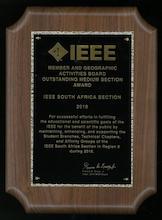
(i) Two IEEE EAB international awards granted in 2009.
(ii) One nomination submitted for the IEEE Computer Society "Distinguished Service in a Pre College Environment" - submitted before 31 Jan. 2010.
(iii) Two nominations (pre-university & service citation) (IEEE EAB awards) submitted in 2010.
IEEE Computer Society - Education Awards
Taylor L. Booth Education Award
Nomination Deadline: 15 October, 2010
A bronze medal and $5,000 honorarium are awarded for an outstanding record in computer science and engineering education. The individual must meet two or more of the following criteria in the computer science and engineering field: 1. Achieving recognition as a teacher of renown. 2. Writing an influential text. 3. Leading, inspiring or providing significant education content during the creation of a curriculum in the field. 4. Inspiring others to a career in computer science and engineering education.
Computer Science & Eng. Undergrad Teaching Award
Nomination Deadline: 15 October, 2010
Awarded for outstanding contributions to undergraduate education through teaching and service, and for helping to maintain interest in the field and make a statement about the importance with which the IEEE Computer Society views undergraduate education.
Distinguished Service in a Pre College Environment
Nomination Deadline: 31 January, 2010
NOMINATIONS ARE ACCEPTED THROUGHOUT THE YEAR. A plaque is awarded for furthering the professional and technical goals of the IEEE Computer Society in a pre-college environment.
|